Avoiding Underfunding: Recent Context and a Path Forward
Underfunded reserves rarely come from one bad decision. Many factors cause the shortfall over time. We review how to avoid those shortfalls through a founded understanding and appropriate planning.
Introduction to Reserve Funding
Reserves are the money a community association sets aside, year after year, for the major repairs and replacements of the common area assets it is responsible for maintaining. The common phrase known in Florida is stated as "paving, painting, roofing, and anything above $10,000". This has naturally changed with legislative updates over the past few years, which you can find more on within our SIRS service page, but the general intent is the same.
Components within your association's property will deteriorate to the point that major repair, refurbishment, and/or replacement will be required. Reserve funding is collected so those required projects can occur seamlessly and without financial strain to the association.
Underfunding vs. Underfunded
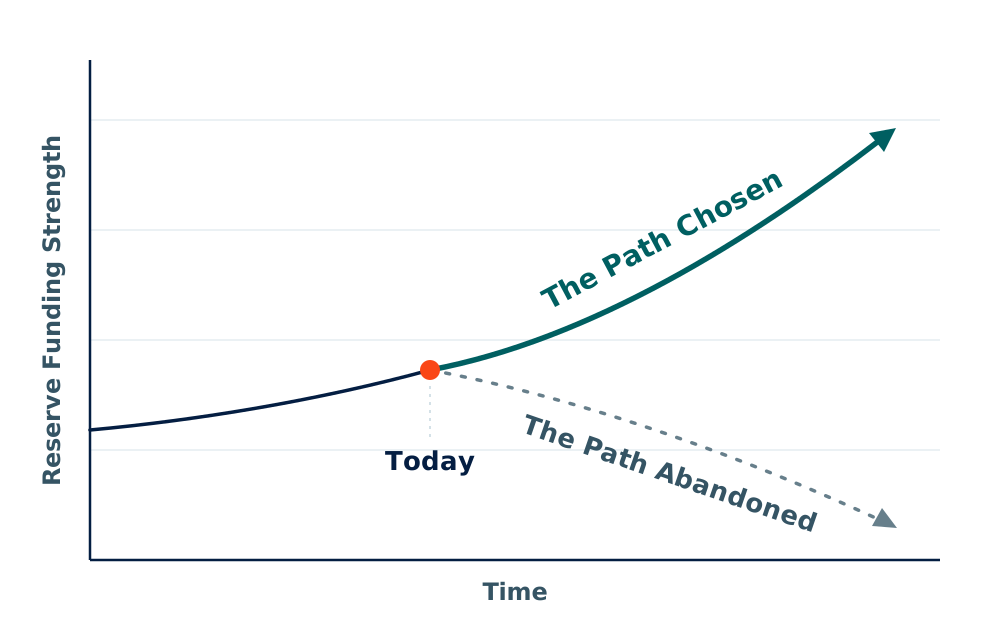
Underfunded is a position based on past action, one that has culminated over time. It means that without change, reserves are inadequate for the projects now anticipated to occur in the immediate and long-term future. Often, no single meeting created this shortfall. It accumulates quietly, one deferred project or one delayed reserve funding increase at a time, until the gap is large enough to force a hard decision (where to get the necessary funding to complete the necessary projects).
Underfunding is an action. To choose to underfund is essentially to decide and acknowledge that there won't be enough reserve funds in the future to complete major projects. The good news is that underfunding is a planning problem, and planning problems can be corrected. The fix ultimately rests on 1) keeping an up to date reserve plan (through appropriate Reserve Study updates) and 2) a board that is intent on minimizing deferred maintenance as well as financial strain for the association in the future.
Why Even Well-Run Communities Can Become Underfunded
Decision-makers rarely underestimate funding levels out of carelessness. Underfunded reserves typically arise from various factors. As a Reserve Study provider, we've seen specific examples that have organically caused reserve shortfalls in Florida through the 2020's that include but aren't limited to:
- COVID-19 & Related Supply Chain Issues (Causing Substantial Cost Increases For Certain Products)
- Hurricanes (Ian, Idalia, Helene, Milton)
- Subsequent Jumps in Insurance Premiums
- Substantial Year-Over-Year Project Cost Increases (Many Related to the Above)
The compounding effects from the above items put many associations, even ones doing the right things, behind the curve. Sure, some associations openly decide not to adequately fund reserves, but others trying to fund their reserves appropriately have been burned by factors outside of their control.
Future costs can be genuinely hard to project, especially in Florida, where labor, materials, and insurance have all risen quickly. One storm, multiple years of trying to maintain a level assessment for residents, or making budgeting decisions from old data can transition a well-funded association to one with long-term financial concerns.
Realizing Your Community May Be Underfunded
As they say, the first step to correcting any problem is realizing you have one. While the following doesn't guarantee that your community is underfunded, any of these might be an indicator that funding has fallen behind:
1. Visibly Deferred Maintenance
Appropriate funding typically means that projects are proactively planned and completed within a reasonable timeframe. In our experience, properties presenting an attractive and well-maintained appearance often have a better funding outlook. Likewise, those with poor funding often show it. Trust your eyes.
2. Level Assessments for Long Periods of Time
We've heard "our dues haven't been raised for X years" said with a proud expression more times than we can count. That may have been fortunate in the immediate term for owners' bank accounts, but the association's funding continuously suffers the longer increases to assessments are delayed. Whether we like it or not, the cost of living continually rises. Insurance premiums, groceries, home values, etc. We've all seen jumps in those over the past several years. Reserve projects are no different. Assessments should be adjusted periodically, often annually, to account for that rise in costs.
3. No Reserve Study
The only way to fully understand your association's financial position is to have a comprehensive analysis of where your reserve finances stand. Yes, we know it sounds biased, but a Reserve Study provides that clear evaluation.
Course Correction
Naturally, we believe that the first step is to have a Reserve Study completed to determine where your association stands financially. The component list within it will tell you what you have, and what projects you can predictably expect. The Percent Funded metric (comparison of what you have versus what you should have) will provide indication of how strong your current reserve funds are. The report should then provide you a path forward in funding recommendations with related long-term (typically 30-year) funding projections.
If your association is behind, the next step is to decide on the corrective step to be taken. That decision should be based on all available information, from the Reserve Study's recommendations to the membership's financial capabilities to other funding routes.
From the decision on, open communication is key. It isn't the board's job to satisfy all residents, which probably isn't possible anyways. But it is the board's job to act in the best interest of the association. Hard decisions may be required, and communication of the reasoning "why" those decisions occurred is necessary.
SIRS Funding Requirement in Florida
The commentary below is not intended to represent a legal opinion, as we are not attorneys. Thus, we are just providing this context based on our understanding of current available information.
For condominium and cooperative buildings three habitable stories and taller, state legislation was adopted to require a Structural Integrity Reserve Study (SIRS): a deeper study of the building's structural components once at least every 10 years.
Historically, condominiums and co-ops could choose to waive their reserve funding requirements through appropriate procedures (typically a membership vote). If desired, those associations could effectively omit reserve funding completely. Within the new legislation, a requirement was implemented to mitigate the underfunding of reserves. Budgets can no longer waive or underfund reserves for SIRS-related items, which removes an option many associations once used to keep fees low. However, that same method can still potentially be used to waive reserve funding for traditional (non-SIRS) reserve items.
Turn the reading into your community's numbers
General answers only go so far. A scoped proposal applies them to the property your board actually manages.
Any statute references on this website were last reviewed on September 12th, 2026. Laws change, and no information on this website is intended as a legal opinion. Please verify current legislative requirements with your association attorney.